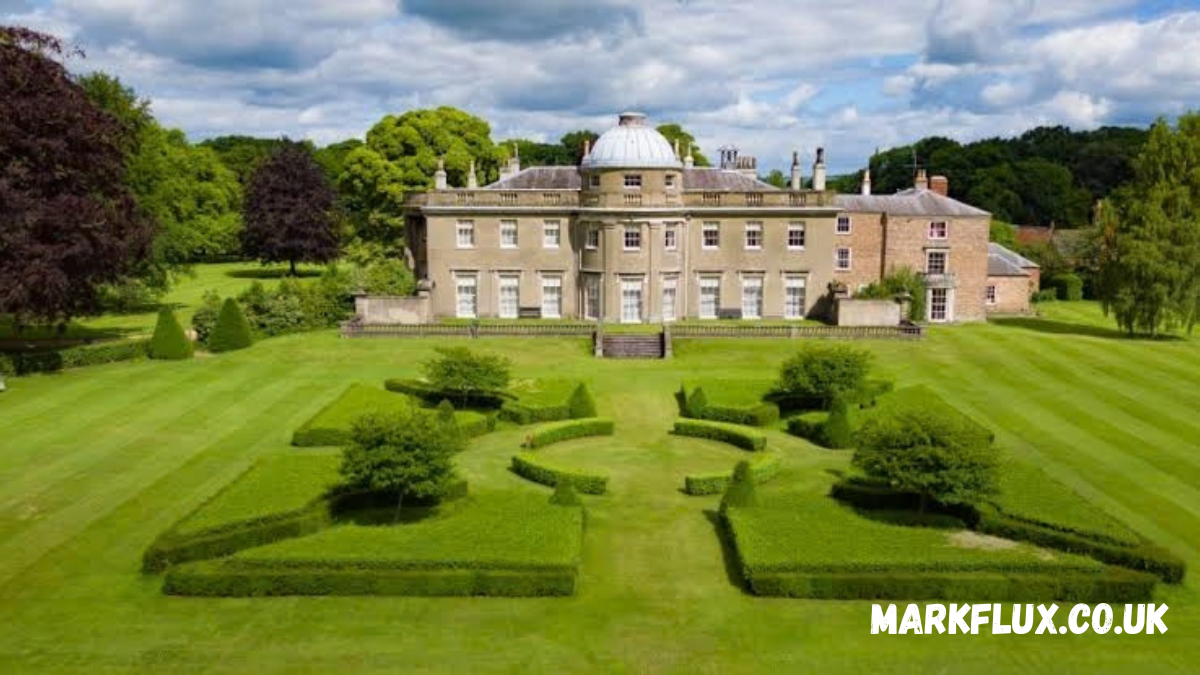
Castle gardens malton There are places you visit because they are famous, and then there are places you find almost by accident and remember because they feel different. Castle Gardens Malton belongs firmly in the second group.
Tucked away near Castlegate in the centre of Malton, North Yorkshire, the garden is not the sort of attraction where you arrive expecting a huge castle, formal fountains or a packed visitor centre. Much of what makes it interesting is actually beneath your feet. The site has a history stretching from the Roman period through the Norman era and later to a substantial Elizabethan/Jacobean house. Today, it is a peaceful green space with trees, paths, wildlife and links towards Orchard Fields.
That combination is what makes Castle Gardens particularly enjoyable. You can spend a short time there simply walking and sitting, or use it as part of a longer historical walk around Malton.
Where are Castle Gardens Malton?
Castle Gardens is at 39 Castlegate, Malton, North Yorkshire, YO17 7EA. It is close enough to the town centre that you can combine a visit with Malton’s shops, market and food spots rather than treating the gardens as a separate day trip.
One thing that can be confusing when planning a visit is the name. You are not travelling to a preserved medieval castle with towers and furnished rooms. The modern garden occupies land associated with the former castle and later buildings.
That is actually part of its charm.
The remains are largely archaeological rather than dramatic standing ruins. Historical sources describe the land as containing evidence associated with a Roman fort, a Norman castle and a later mansion. The whole site has been treated as a Scheduled Ancient Monument because of its archaeological importance.
So if you arrive expecting something like Castle Howard or a conventional castle attraction, you may initially wonder where the castle has gone. The better way to approach Castle Gardens is as an historic landscape.
A garden with around 2,000 years of history
This is probably the most interesting thing about Castle Gardens.
The site’s story begins in the Roman period. The wider Malton area was home to the Roman settlement and fort known as Derventio. Archaeological work has revealed evidence of military and civilian activity in the area, while geophysical surveys have helped researchers understand features that are not obvious when you are simply walking across the grass.
Later came the medieval castle.
A Norman castle was established here, initially in timber and subsequently in stone. The castle eventually fell into ruin, and centuries later the site was used for a much grander residence associated with the Eure family. Historical research by the Yorkshire Gardens Trust describes a major house built around 1600, with much of it later demolished in the 1670s. The remaining gatehouse eventually became part of what is now associated with the Old Lodge.
That is an extraordinary amount of history for what, at first glance, looks like a quiet patch of woodland.
And this is where Castle Gardens differs from a conventional museum. You are not simply looking at objects behind glass. The landscape itself is part of the historical evidence.
What is Castle Gardens like today?

The first impression is generally much more peaceful than the site’s history might suggest.
Visitor information describes a wooded area with paths, seating and wildlife. Rabbits and birds are among the creatures visitors have reported seeing, and the garden connects with the wider Orchard Fields area.
There is no need to rush around trying to tick off attractions.
A realistic visit might look something like this:
- Walk into the garden from Castlegate.
- Follow the paths through the wooded area.
- Stop at one of the seating areas.
- Look for signs or features explaining the history.
- Continue towards the connection with Orchard Fields.
- Spend some time exploring the surrounding historic landscape.
- Return to Malton town centre for food or a coffee.
For me, the important point when planning a visit is to allow some breathing room. This is better suited to a slow 20–45 minute wander than a rushed five-minute photo stop.
The garden’s appeal is in the atmosphere.
The entrance is worth paying attention to
One of the easy mistakes is to think of the entrance as just another gate.
The garden has a distinctive historic entrance, including an old arched gateway. Photographs of the site show the gateway surrounded by greenery, giving a good first impression of the character of the place.
If you are interested in photography, this is one of the first places I’d have a look at.
A phone is more than enough. You do not need a DSLR or special equipment. On an overcast day, the combination of old brickwork, greenery and the darker interior of the gateway can produce a much more atmospheric photograph than a bright midday shot.
A simple mistake is to stand directly in front of the entrance and take only one wide photograph. Try moving slightly to one side and photographing through the gateway instead. That gives the image some depth.
Don’t expect a traditional formal garden
The word “gardens” can create the wrong expectation.
Castle Gardens is not primarily a formal flower garden filled with carefully arranged beds. Much of the experience is woodland, paths and natural vegetation. Visitor descriptions emphasise its calm, wooded character rather than elaborate horticultural displays.
That makes it particularly useful for different types of visits.
For a quiet walk
If you are staying in Malton and want somewhere away from the busiest streets for a little while, the garden provides an easy option.
For history enthusiasts
The archaeological story makes the site much more interesting than its size suggests.
For photographers
The combination of trees, old walls, paths and the historic gateway works well for casual photography.
For families
It can form part of a wider walk, although I would not treat it as a large children’s attraction with playground equipment and organised entertainment.
For walkers
The connection with Orchard Fields makes it more useful than simply visiting the garden on its own.
Castle Gardens and Orchard Fields: visit both together
This is probably the biggest practical tip I’d give someone planning a first visit.
Don’t automatically stop when you’ve walked around Castle Gardens.
The nearby Orchard Fields area is closely connected to the archaeological story of Malton. Research from the University of York’s Malton Field School shows how geophysical surveys have been used to investigate features of the Roman fort and surrounding landscape. The survey material specifically identifies the area inside Castle Gardens and Orchard Fields as part of the wider archaeological landscape.
This changes the experience.
Instead of thinking:
“I’ve visited a small garden.”
you can think of it as:
“I’ve walked through part of Malton’s Roman and medieval landscape.”
That’s a much better way to appreciate the place.
Be aware, however, that different sources give different practical descriptions of access between the areas, so visitors should follow signs and respect any restrictions rather than assuming every visible path is publicly accessible.
How long should you spend at Castle Gardens?
For Castle Gardens alone, you don’t need half a day.
I’d allow roughly:
- 15–20 minutes: quick look and photographs
- 30–45 minutes: relaxed walk with time to sit
- 1–2 hours: Castle Gardens plus Orchard Fields and nearby historical sights
The longer option makes more sense if you’re already spending a day in Malton.
One of the advantages of the location is that you don’t have to build your entire itinerary around it. You can visit the garden in the morning, explore the town centre, have lunch and then continue to another attraction.
Practical information before you go
Current visitor information lists Castle Gardens as open daily from 8am to 6pm, although opening arrangements can change, so it is sensible to check current information before setting out.
The listed address is:
Castle Gardens
39 Castlegate
Malton
North Yorkshire
YO17 7EA
The garden itself is generally treated as a free-access public green space.
What should you bring?
You really don’t need much.
A practical kit would be:
- Comfortable walking shoes
- Your smartphone
- A bottle of water
- A lightweight rain jacket
- Camera, if you enjoy photography
- Google Maps or another navigation app
I would choose footwear with a little grip rather than completely smooth trainers, particularly after rain.
A note about accessibility
This is an area where visitors should plan rather than assume.
Visitor information notes a steep climb up steps from the street into the wooded area.
That means the easiest-looking route on a map may not necessarily be the easiest physical route.
If you have limited mobility, check the current access arrangements before visiting and consider whether the terrain and entrance are suitable for you.
Another detail worth knowing is the dog policy. Current visitor information says only assistance dogs are permitted in the gardens. This is especially important because some online reviews and general information about Malton describe the wider town as dog-friendly, which can create confusion.
If you’re travelling with a pet, don’t rely on a general “Malton is dog friendly” assumption. Check the specific garden rules.
When is the best time to visit?
There isn’t one perfect season, because Castle Gardens changes character throughout the year.
Spring
Spring is a good choice if you enjoy fresh greenery, birds and woodland plants. The garden starts to feel lively without losing its quiet atmosphere.
Summer
Summer gives you fuller tree cover and a greener appearance. If the weather is good, it is an easy place to combine with a longer walk around Malton.
Autumn
This could be one of the most atmospheric times to visit. The woodland setting naturally suits autumn colours, and the historic surroundings look particularly good in softer light.
Winter
Winter strips away some of the greenery and can make the landscape feel more open. If archaeology interests you, that can actually be useful because earthworks and landscape features may be easier to notice.
I’d avoid planning your visit around a particular flower display unless you’ve checked current local information. This isn’t primarily a formal seasonal flower attraction.
A simple Castle Gardens Malton walking plan
If I were putting together a straightforward half-day plan for someone visiting Malton for the first time, I’d keep it simple.
Step 1: Start in central Malton
Begin around the market area and walk towards Castlegate.
Step 2: Visit Castle Gardens
Give yourself 30–45 minutes rather than rushing through.
Look at the old entrance, woodland, paths and historic landscape.
Step 3: Continue towards Orchard Fields
Explore the archaeological setting and information available there, following public routes and signage.
Step 4: Return towards the town centre
This gives you the opportunity to look around Malton’s independent shops and food businesses.
Step 5: Add another attraction if you have time
Malton works well as a base for exploring other nearby attractions. For example, Scampston Hall and Walled Garden is around five miles east of Malton and offers a very different garden experience, with a contemporary walled garden and wider parkland.
This comparison is useful because it shows why Castle Gardens shouldn’t be judged by the standards of a large designed estate. They are different experiences.
Common mistakes visitors make
Mistake 1: Expecting a complete castle
There isn’t a large castle building waiting at the top of the path.
The important remains are archaeological and landscape-based.
Mistake 2: Spending only five minutes there
You can certainly do that, but you’ll miss much of the atmosphere.
Sit down for a few minutes. Look at the trees and ground levels. Think about what has occupied this same piece of land over the centuries.
Mistake 3: Wearing unsuitable shoes
After wet weather, woodland paths can be less forgiving than a town pavement.
Mistake 4: Assuming dogs are allowed
Current visitor information says only assistance dogs are permitted. Check before travelling with a pet.
Mistake 5: Visiting without seeing the wider archaeological area
Castle Gardens makes more sense when you understand its relationship with Malton’s Roman landscape and Orchard Fields.
Is Castle Gardens worth adding to a Malton visit?
Castle Gardens makes the most sense for people who enjoy quiet places, local history, archaeology and short walks.
It isn’t a huge attraction and doesn’t try to be one. There are no grand castle rooms to explore and no long list of paid activities. Instead, it gives you a chance to walk through a small part of Malton where several different periods of history overlap.
That is what makes it memorable.
The most interesting detail is perhaps the least visible one: the peaceful woodland you see today sits above a landscape that has been used and changed for roughly two thousand years. Roman activity, the medieval castle and the later mansion all form part of the site’s story.
So if you’re already in Malton, I wouldn’t treat Castle Gardens as a major standalone attraction requiring an entire day. I’d treat it as a quiet historical stop that becomes much more rewarding when combined with Orchard Fields and the town centre.
Take your time, wear sensible shoes, check the current access and dog rules, and look beyond the trees. Once you know what lies beneath the garden, an ordinary-looking path becomes a much more interesting walk.