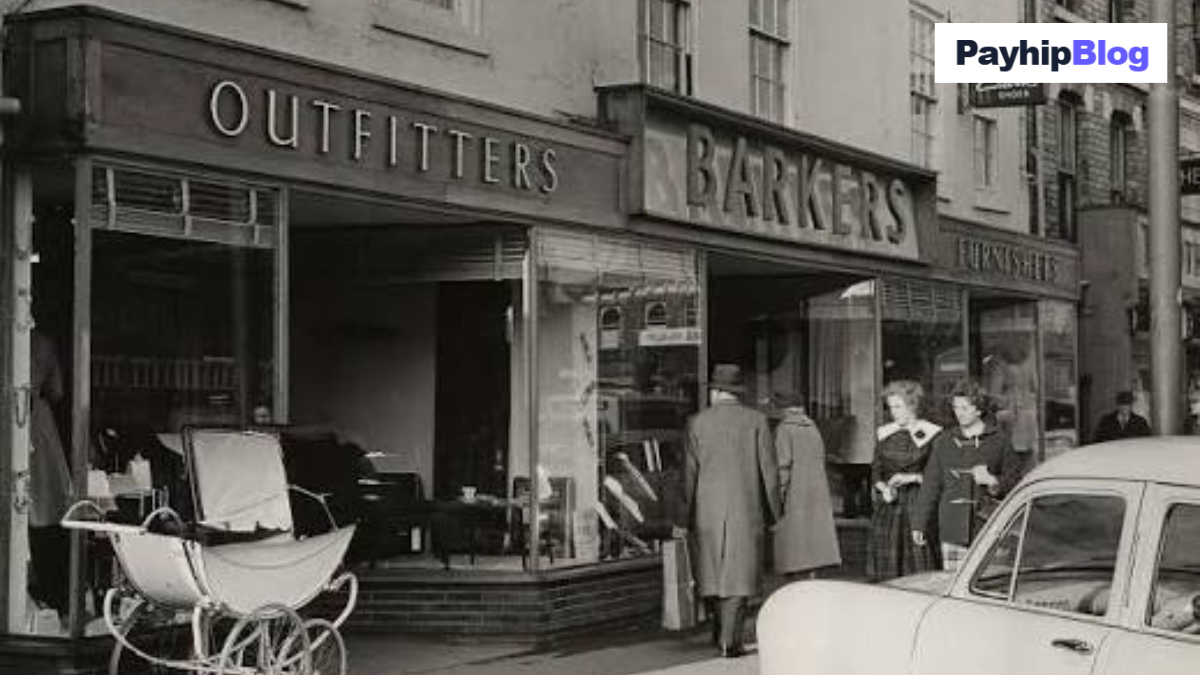
If you search for Barkers Shopping Arcade, you may come across more than one place using the Barkers name. The most historically notable reference is the former Barkers department store and shopping arcade on Kensington High Street in London. There is also a Barkers Arcade in Northallerton, North Yorkshire, which remains part of an active retail environment.
This article focuses primarily on the historic London arcade because it is closely connected with the story of John Barker & Co., one of the major department-store businesses that helped shape Kensington High Street.
The London story is interesting because Barkers was not simply a collection of shops. It was part of a much larger department-store complex that changed considerably over more than a century. Its final form included a smaller department store, boutiques, offices, garden terraces and an impressive atrium. The shopping arcade itself opened in 1987, shortly before the Barkers business entered its final years.
What Was Barkers Shopping Arcade?
Barkers Shopping Arcade was a retail arcade developed as part of the redevelopment of the Barkers department-store building on Kensington High Street in London.
The arcade was created during a major restructuring of the Barkers property in the 1980s. By that point, the original department store had become much larger than the level of trade required. In 1982, plans were made to reduce the department store from seven sales floors to four and redevelop the surrounding space.
The result was a more compact Barkers department store of about 140,000 square feet, accompanied by a new arcade containing nine boutiques. The redevelopment also included office accommodation and garden terraces. The new department store was completed in 1986, while the shopping arcade opened in October 1987.
That detail is important because Barkers Shopping Arcade was not an old Victorian arcade that had simply survived unchanged. It was a relatively late addition to the historic Barkers building, created as part of an ambitious attempt to adapt a traditional department-store property to changing shopping habits.
The Story Behind Barkers of Kensington
To understand the arcade, it helps to understand Barkers itself.
John Barker & Co. became an important retail business in Kensington. Over the years, the company expanded its operations and became associated with several major department stores in the area, including Derry & Toms and Pontings.
The three stores contributed significantly to Kensington High Street’s development as an important shopping destination. Historical accounts describe Barkers, Derry & Toms and Pontings as major retailers that helped Kensington compete with the more famous shopping districts of central London.
The Barkers building that people often associate with the company was designed with an Art Deco character. Architect Bernard George worked on the design, with construction beginning before the Second World War. The war interrupted the project, and the building was eventually completed in 1958.
This long construction history is one reason the building has such an interesting architectural background. It represents a mixture of pre-war design ambitions and post-war completion.
From a Huge Department Store to a Shopping Arcade
For many years, Barkers operated on a huge scale.
By the early 1980s, however, the company faced a practical problem: the store’s sales area was simply too large for the amount of trade it was generating. The solution was not to abandon the building immediately. Instead, the property was redesigned.
The redevelopment reduced the number of retail floors and created space for smaller businesses.
This is where the Barkers Shopping Arcade became important. Rather than relying entirely on one enormous department store, the building could accommodate smaller specialist retailers alongside the main store.
The arcade eventually contained nine boutiques. This model made sense for the period because smaller specialist shops could provide a different experience from the traditional department-store format.
For a visitor, that would have meant walking through a dedicated retail environment rather than simply entering one large store and moving between departments.
What Made the Building Special?
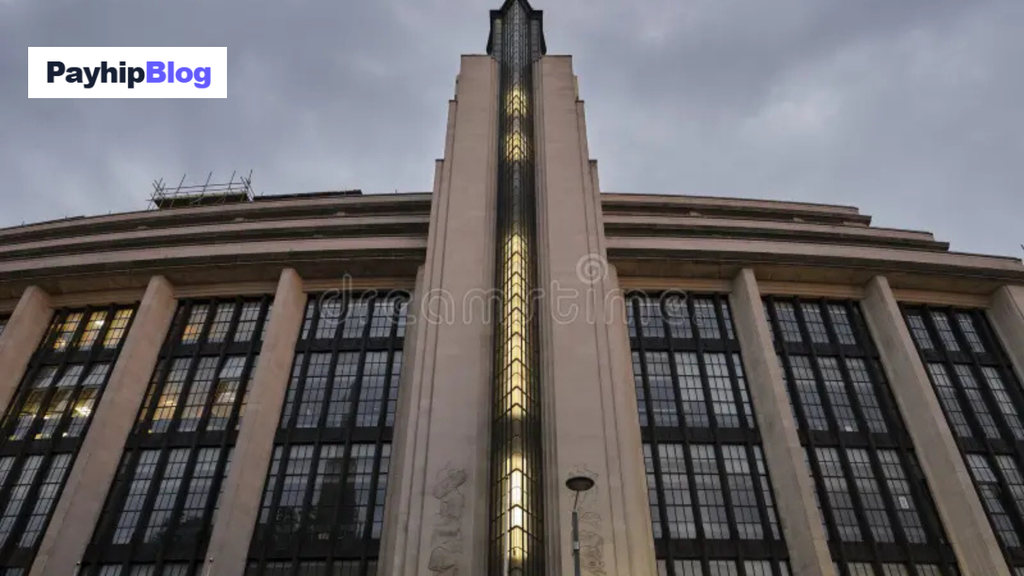
One of the most interesting features of the redevelopment was its dramatic interior architecture.
The Barkers redevelopment included a barrel-vaulted atrium described in historical material as the largest of its type in Europe at the time. The atrium overlooked garden terraces and formed an important part of the redesigned complex.
This is a useful reminder that shopping architecture is often about more than putting stores next to each other.
Natural light, open space, views, entrances and circulation all affect how comfortable people feel inside a retail building. A person may not consciously think about architectural planning while shopping, but those details can influence whether a place feels cramped, confusing or enjoyable.
The Barkers redevelopment attempted to make the enormous historic building feel more manageable by combining retail, offices and leisure-oriented spaces.
Visiting the Area Around Kensington High Street
If you are interested in Barkers because of its history rather than simply shopping, Kensington High Street is best approached as part of a wider architectural and cultural walk.
Instead of treating the former Barkers building as an isolated attraction, you can explore the surrounding streets and look at how Kensington developed as a commercial district.
A practical walking visit could begin around High Street Kensington station and continue along Kensington High Street. Depending on your interests, you can combine the walk with nearby cultural destinations and parks.
Google Maps on a smartphone is useful for this kind of visit because historic retail buildings can look very different from old photographs. A modern shopfront may occupy a building whose original purpose is not immediately obvious.
A common mistake is expecting to find the exact shopping arcade shown in historical photographs operating in precisely the same form today. The Barkers department store closed permanently in the mid-2000s, so the former retail environment has changed substantially.
When Did Barkers Department Store Close?
The Barkers department store eventually reached the end of its long retail history.
House of Fraser, which had acquired John Barker & Co. in 1957, announced the closure of the Barkers store in August 2005. The store subsequently closed, bringing an end to a retail business with a history stretching back roughly 135 years.
Sources vary slightly in how they describe the final closure date, with some historical accounts referring to the closure as occurring in 2006. What is clear is that the Barkers department store ceased trading in this period and the famous department-store era came to an end.
The building did not simply disappear, however.
Parts of the former Barkers premises were subsequently reused for other purposes. Historical architectural sources note that the building later became associated with Whole Foods Market and other commercial uses.
That kind of reuse is common with major historic commercial buildings. A structure can lose its original retail identity while retaining architectural features that connect it to its earlier history.
Is Barkers Shopping Arcade Still Open?
This is where online searches can become confusing.
If you search for “Barkers Shopping Arcade London,” many historical references relate to the former Kensington arcade. It should not be assumed that the 1987 Barkers Shopping Arcade continues to operate today in exactly the same form barkers shopping arcade.
The Barkers department store itself closed, and the building has subsequently been used by other businesses.
At the same time, there is another Barkers Arcade in Northallerton, England. That arcade is connected to Barkers’ retail operations in North Yorkshire and should not be confused with the historic Kensington site.
Recent information about the Northallerton arcade describes it as containing a variety of retail and commercial premises, including a jeweller, shoe shop, florist, beautician and hairdresser. Work has also been carried out on its roof glazing to improve the building and address problems with older rooflights barkers shopping arcade.
So, before planning a visit, check the town and address carefully.
Barkers Shopping Arcade vs. Northallerton Barkers Arcade
The easiest way to avoid confusion is to look at the two locations separately.
Barkers Shopping Arcade, Kensington, London
This is the historic arcade associated with the former Barkers department store on Kensington High Street. Its arcade opened in 1987 as part of a major redevelopment of the department-store building. The Barkers department store later closed, and the building was adapted for new uses barkers shopping arcade.
Barkers Arcade, Northallerton
This is a separate retail arcade in North Yorkshire. It remains associated with Barkers’ current retail environment and includes independent and commercial businesses. Recent improvement work has included replacement roof glazing barkers shopping arcade.
The shared name can easily lead someone searching on Google to the wrong location.
How to Research Barkers Before a Visit
If you are interested in the historical London site, a little preparation can make the experience much more rewarding.
Start by searching Google Maps for the current building rather than simply typing “Barkers Shopping Arcade.” Then use Google Images or an online archive to compare historical photographs with the present-day appearance barkers shopping arcade.
A tablet, laptop or smartphone works well for this because you can keep an old photograph open while walking through the area.
For deeper research, look for archive material relating to John Barker & Co. The House of Fraser Archive contains historical information about the company’s development, acquisition by House of Fraser and later redevelopment barkers shopping arcade.
Historical architectural resources are also useful because they explain why the building looks the way it does rather than simply showing photographs.
One mistake I would avoid is relying entirely on image-search captions. Old photographs are often uploaded by different websites with varying dates and descriptions. When an exact date matters, it is better to compare the information with an archive, historical society or architectural source.
Why Barkers Matters to London’s Retail History
The story of Barkers is useful because it shows how London’s shopping streets have repeatedly adapted.
A large department store could once occupy enormous amounts of floor space and employ large numbers of people across dozens of departments. Over time, customer expectations, retail competition, property values and shopping patterns changed.
Barkers responded by shrinking its retail operation and introducing smaller boutiques and other uses into the building.
Eventually, even that model was not enough to preserve the department store.
This is not unusual in retail history. Buildings often survive longer than the businesses that originally occupied them.
The same pattern can be seen throughout London. Former department stores, banks, cinemas and warehouses have frequently been converted into supermarkets, offices, restaurants, apartments or mixed-use developments.
Barkers provides a particularly clear example because the building remained an important piece of Kensington’s streetscape even after the department store disappeared.
What to Look for in Historical Photographs
If you are researching Barkers for a blog, school project, history assignment or personal interest, do not only look at the shop signs.
Pay attention to the building itself.
Look at the facade, entrance arrangement, windows, signage, pedestrian movement and neighboring buildings. Compare photographs from different decades and notice how the street changed.
Photographs from the mid-20th century can also show how department stores presented themselves to customers. Displays, mannequins, advertisements and shop windows provide clues about the retail culture of the period.
The Barkers story becomes much more interesting when you compare three stages: the original department-store era, the 1980s redevelopment and the building’s later commercial use.
Common Questions About Barkers Shopping Arcade
Where was Barkers Shopping Arcade?
The historic Barkers Shopping Arcade was part of the former Barkers department-store complex on Kensington High Street in Kensington, London.
When did the Barkers Shopping Arcade open?
The shopping arcade opened in October 1987 as part of a major redevelopment of the Barkers property.
Was Barkers a department store?
Yes. John Barker & Co. operated a major department store in Kensington and eventually became part of House of Fraser.
When did Barkers close?
The Barkers department store closed in the mid-2000s after House of Fraser announced its closure in 2005. Historical sources commonly refer to the final closure as 2006.
Is Barkers Shopping Arcade the same as Barkers Arcade in Northallerton?
No. They are separate locations. The London arcade was part of the former Kensington department store, while Barkers Arcade in Northallerton is a separate retail arcade in North Yorkshire.
Can I still visit the old Barkers department store?
You can visit the Kensington area and see the historic building, but you should not expect the former Barkers department store to operate as it did during its retail years. The building has been adapted for later commercial uses.
A Piece of Retail History Worth Remembering
Barkers Shopping Arcade is interesting because its story is really a story about change.
The Barkers name was once connected with a huge department-store business that helped make Kensington High Street an important shopping destination. Decades later, the same building was redesigned to create a smaller department store and a collection of boutiques. The arcade opened in 1987, but the department store itself eventually disappeared.
The physical building, however, continued to have a life beyond Barkers.
That is perhaps the most interesting thing about historic shopping places. A shop can close, a sign can come down and a business can disappear, but the building can continue telling part of the story. If you visit Kensington High Street today, knowing the Barkers history gives you another way to look at the street—not simply as a modern shopping area, but as a place shaped by generations of retailers, architects, shoppers and changing ideas about what a department store should be.
next Read: furtherbusiness com